Starting Solids: What to Offer First, and What to Skip
Readiness signs matter more than the calendar, allergens should come early rather than late, and the first-foods order you were given is mostly tradition. A practical guide to the first month of solids.
By Hannah Doyle
Last update: 2 min read
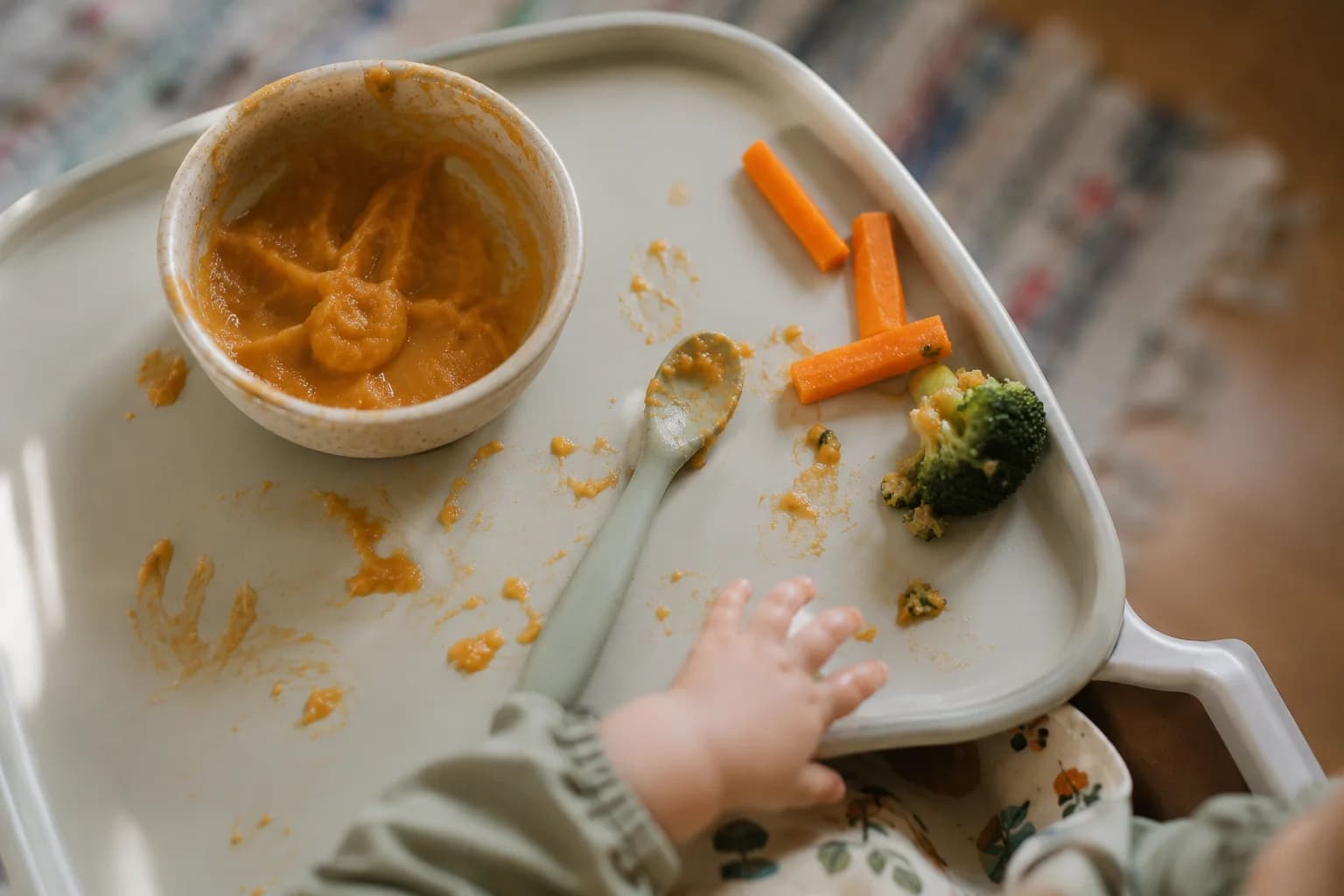
Start solids and everyone tells you something different, with total confidence. Rice cereal first, or never rice cereal. Vegetables before fruit or your baby rejects vegetables for life. Delay the allergens, or do not delay them. Most of that is tradition rather than evidence.
Four readiness signs
Wait for all four:
- Sits upright with support and holds their head steady
- Has lost the tongue-thrust reflex that pushes food back out
- Shows real interest in what you are eating
- Can bring objects to their mouth with some accuracy
A baby who watches your fork but cannot hold their head steady is interested. Wait for the head control.
First foods
The traditional progression, single-grain cereal then yellow vegetables then green then fruit, is a convention. No study produced it, and nobody has shown that early fruit creates a sweet-preferring toddler. Babies are born preferring sweet.
Iron. Your baby's iron stores start running down at around six months, and breastmilk holds little iron. Offer iron-rich foods early and often: well-cooked meat, lentils, beans, tofu, iron-fortified cereals. Serve them alongside vitamin-C-rich foods to help absorption.
Variety and texture. Babies who meet a wide range of flavours and textures in the first year accept more food later. Repetition helps too, and a rejected food often needs eight or more tries. Watch the water content while you do it, because thin purées carry very little energy; once your baby is managing food, thicken it.
Allergens: early, and then regularly
Allergy specialists reversed this advice years ago, and parents still repeat the old version.
Current recommendations favour introducing common allergens (peanut, egg, dairy, wheat, soy, sesame, fish, shellfish, tree nuts) from around six months, then keeping them in the diet regularly. Introducing once and stopping does not maintain tolerance.
In practice: one new allergen at a time, in a small amount, earlier in the day, while your baby is well and you can watch them. Thin peanut butter until it is smooth, and never give it whole or in large sticky blobs. Cook egg well.
Talk to your doctor before you start if your baby has severe eczema, an existing food allergy, or a strong family history. Some infants need allergen introduction supervised.
Purées or baby-led weaning
Both work. The evidence does not clearly favour either for healthy term infants, and most families end up mixing the two, spoon-feeding some things and handing over others.
Choose what you can sustain. A parent who finds baby-led weaning stressful will do it badly; a parent who finds purée-making tedious will stop.
Milk is still the main event
Through the first year, breastmilk or formula remains the primary source of nutrition. In the early months your baby uses solids to practise: managing texture, coordinating a swallow, working out that food exists at all.
If solids start crowding out milk feeds before nine months, or your baby loses interest in milk, raise it at your next check-up.
Frequently asked questions
When should I start solids?
Around six months, guided by readiness signs rather than the date. Look for sitting with support, good head control, interest in food, and loss of the reflex that pushes food out of the mouth.
Does the order of first foods matter?
Not much. The common "vegetables before fruit" advice is tradition rather than evidence. Variety and iron-rich foods matter more.
When should I introduce allergens?
Current guidance favours introducing common allergens early, from around six months, and keeping them in the diet regularly. Speak to your doctor first if your baby has severe eczema or a known food allergy.
Purées or baby-led weaning?
Both are reasonable. Many families do a mix. The evidence does not strongly favour one over the other for healthy term infants.
Sources
- 1.Starting Solid Foods — American Academy of Pediatrics (accessed Jun 20, 2026)
- 2.Infant and young child feeding — World Health Organization (accessed Jun 20, 2026)