Newborn Wake Windows: What the Evidence Actually Supports
Wake window charts fill parenting social media with almost no evidence behind them. Infant sleep research supports far less than the grids imply, and your baby's cues beat a stopwatch.
By Hannah Doyle
Last update: 1 min read
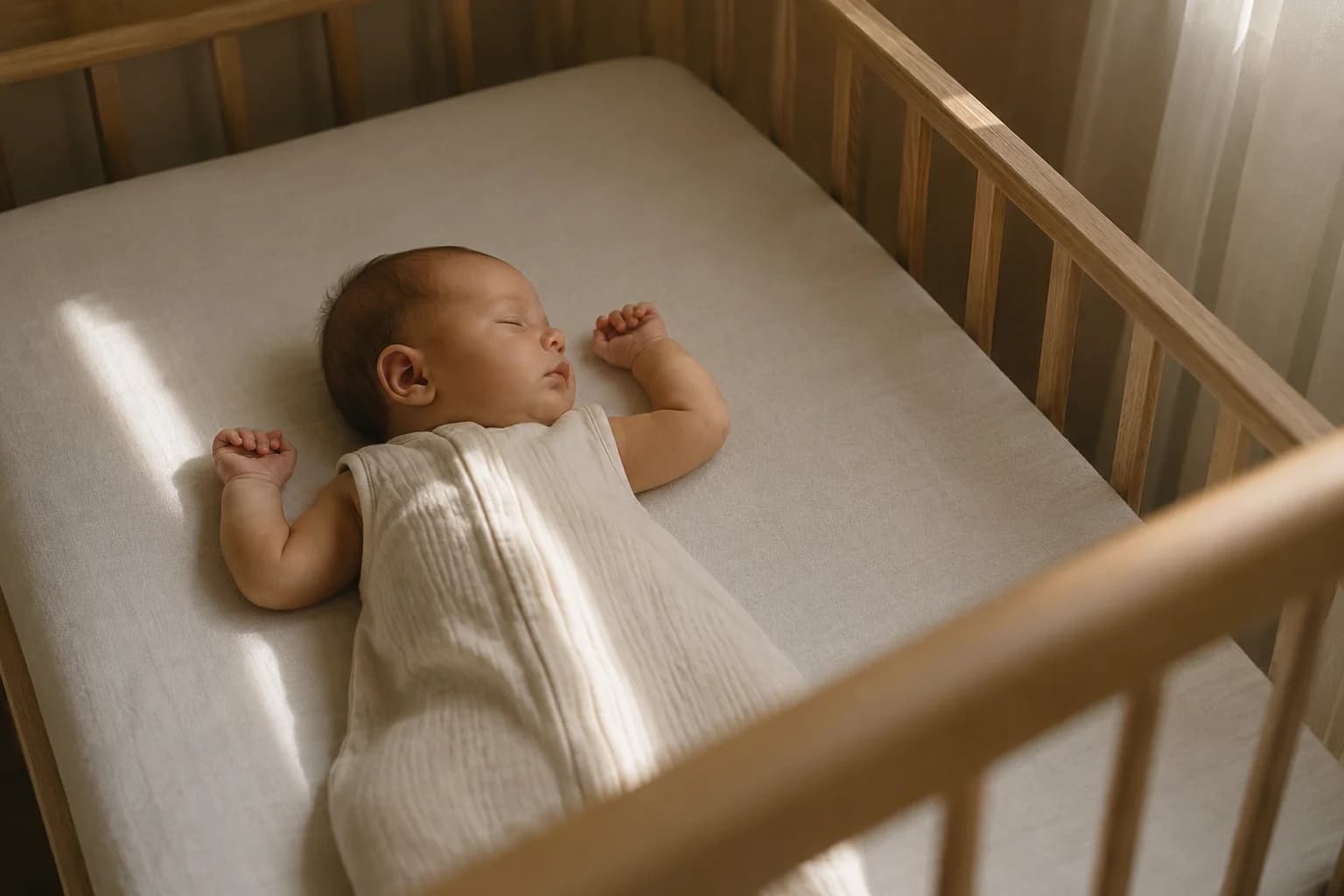
Open any parenting app and you will meet the wake window chart: a grid that puts a six-week-old at 60 minutes awake and leaves you counting the minutes you overshot when bedtime goes badly. Sleep consultants built those charts, and almost none of them cite anything.
Consultants invented the numbers
Wake windows are a rule of thumb rather than a clinical measure. Sleep consultants and parent forums produced them, anchored to something real: sleep pressure builds through the day, and an overtired baby does settle less easily. The idea holds up. The specific numbers carry more authority than anyone has earned for them.
What the research supports
The American Academy of Pediatrics is the reference point for the parts that are reasonably well established:
- Newborns need a lot of sleep, and the spread between healthy babies is wide. The commonly cited figure is 14 to 17 hours across 24 hours, with normal variation on either side.
- Newborn sleep arrives in short bouts around the clock. Babies consolidate night sleep as they develop; training does not produce it.
- Babies show observable cues before they tip into overtiredness, and those cues differ from baby to baby.
No study establishes that a particular number of minutes is correct for a particular week of life.
Read your baby
Watch for a fixed stare, disengagement, jerky movements, that first yawn. Those signals come from your baby rather than from an average of other people's babies, and they arrive before any timer does. Treat the chart as a rough prompt to start watching, then let your baby decide what happens next.
When to raise it with a clinician
Babies vary. Call your own paediatrician about any of these:
- A newborn you repeatedly struggle to wake for feeds
- Poor weight gain, or fewer wet nappies than you expect
- Breathing that looks laboured during sleep
- A sudden change in sleep that holds, with no obvious cause
Those are clinical questions, and no amount of rescheduling naps will answer them.
Sources
- 1.Safe Sleep Recommendations — American Academy of Pediatrics (accessed Jul 1, 2026)
- 2.Infant sleep and its relation with cognition and growth — Nature and Science of Sleep (accessed Jul 1, 2026)