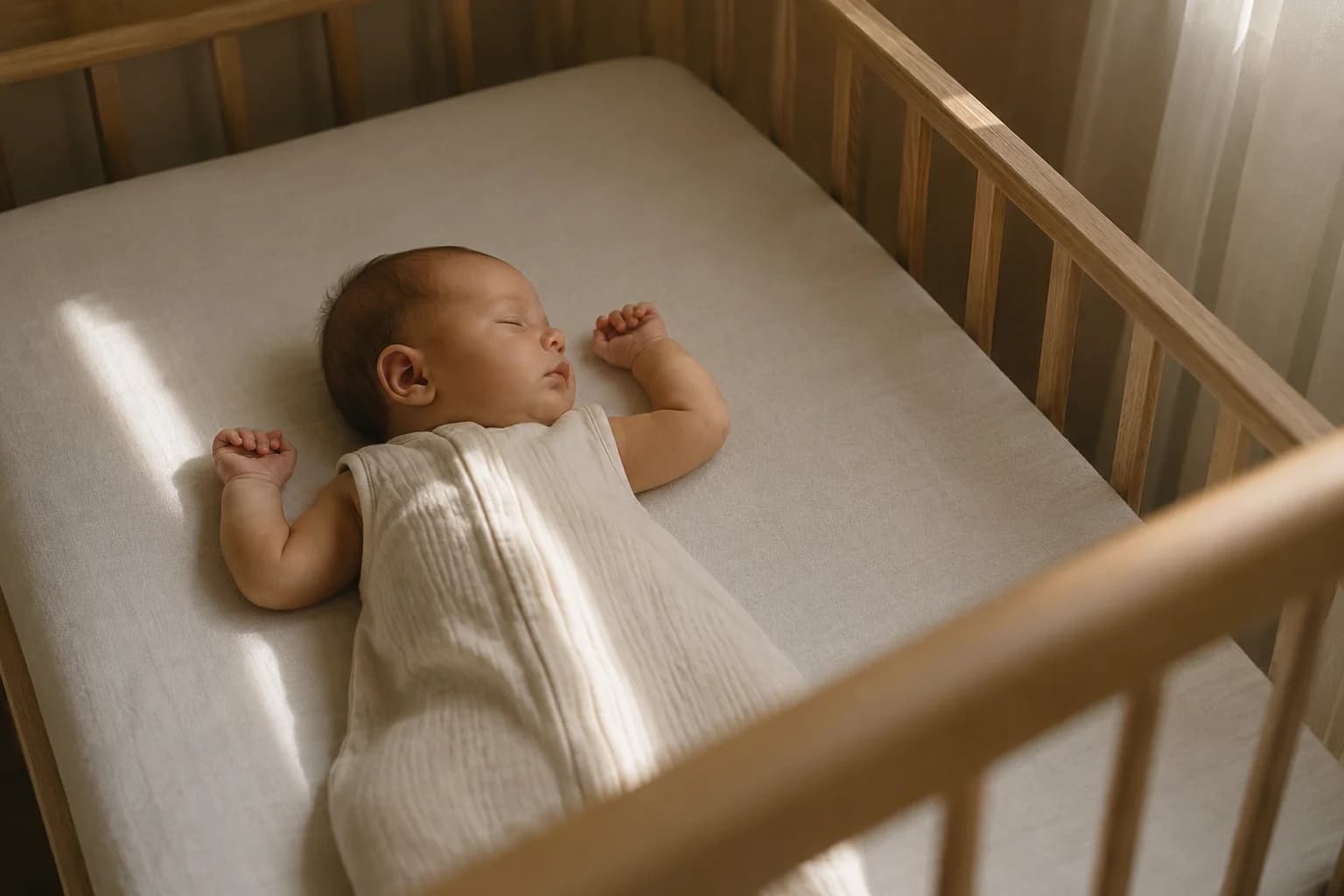
Baby Fever: The Numbers That Mean Call Now
Under three months, any fever is an emergency. Above that age, how your baby looks matters more than the reading. A clear guide to the thresholds and the red flags, reviewed by a paediatrician.
By Hannah Doyle
Last update: 2 min read
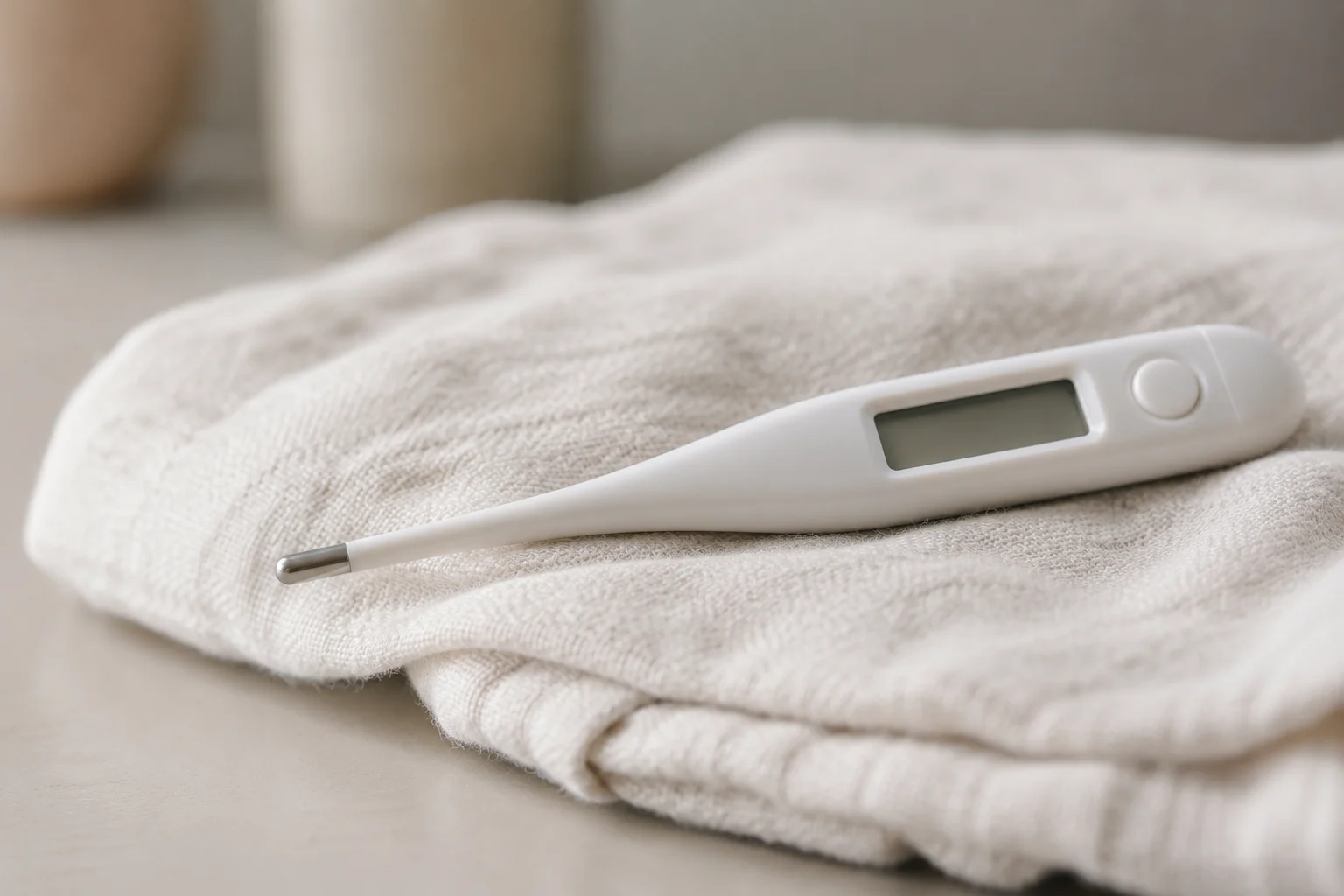
With fever, your baby's age matters more than the reading on the thermometer, and this is one of the few situations where the usual wait-and-see instinct can hurt them.
Taking the temperature
Rectal is the reference standard in infants, and your doctor will ask for it. Use a digital thermometer designed for the purpose, with a small amount of lubricant, inserted no more than about 1.5cm.
Forehead and ear thermometers are convenient, and they work well enough for tracking a trend in an older baby. They are also less reliable and can miss a fever, so never let an axillary or forehead reading reassure you about a newborn.
Never use a mercury thermometer.
Thresholds by age
Under 3 months, 38°C or above. Contact a doctor now. Expect that someone will assess your baby in person and may run tests. Young infants have immature immune systems, can deteriorate fast, and show few signs until they are seriously unwell, which is why the threshold sits so low.
3 to 6 months, 38°C or above. Call your doctor the same day.
Over 6 months. The number matters less. A cheerful baby at 39°C who is drinking and interacting is usually less concerning than a listless baby at 38.2°C. Call if the fever lasts more than about two days, or at any point if you are worried.
Red flags at any age
Seek urgent care regardless of the reading if your baby has:
- Difficulty breathing, grunting, or ribs pulling in with each breath
- A rash that does not fade when pressed with a glass
- A stiff neck, or a bulging soft spot
- Unusual sleepiness, or is very difficult to rouse
- A seizure
- Persistent vomiting, or signs of dehydration: no wet nappy for eight hours, no tears, dry mouth, sunken soft spot
- A weak, high-pitched or continuous cry
- Mottled, pale, blue or grey skin
Paracetamol buys comfort, nothing more
Your baby's immune system produces the fever. Bringing the number down treats nothing and shortens nothing. Give paracetamol or ibuprofen for comfort instead: a baby who feels better drinks more, and hydration is the thing that protects them.
Dose by weight, not age, and follow the packaging. Avoid ibuprofen under three months and in a dehydrated baby. Never give aspirin to a child.
Skip the cold baths and the alcohol rubs. They cause shivering, which raises core temperature, and they are miserable.
You will call about a virus
At some point you will call about a fever that turns out to be an ordinary virus, which is the system working as designed. The clinician on the other end of the phone will not think you wasted their time, and these thresholds exist to stop a parent talking themselves out of calling about a six-week-old.
Frequently asked questions
What counts as a fever in a baby?
A rectal temperature of 38°C (100.4°F) or above. Rectal is the most reliable method in infants.
My baby is under three months with a fever. What do I do?
Contact a doctor immediately, at any hour. In infants under three months a fever is treated as an emergency regardless of how well the baby appears.
Does a higher temperature mean a more serious illness?
Not reliably, beyond the newborn period. Watch how your baby looks and behaves rather than the reading.
Sources
- 1.Fever and Your Baby — American Academy of Pediatrics (accessed Jun 12, 2026)
- 2.Fever in under 5s – assessment and initial management — NHS (accessed Jun 12, 2026)